Tag Play: A Bold Typeface for Urban Creativity
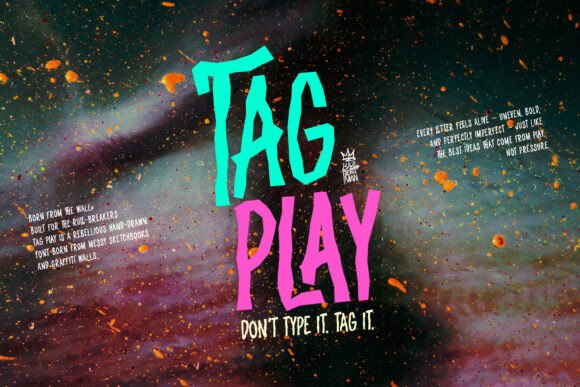
Tag Play isn’t just another font—it’s a statement. Designed with the raw energy of street graffiti and the spontaneity of youth culture, this bold hand-drawn display font captures the spirit of imperfection and rebellion. Each letter is a dynamic composition of brush strokes, full of attitude and expressive flair. Whether you’re crafting a music poster, designing a streetwear label, or creating a YouTube thumbnail, Tag Play injects a pulse of urban authenticity into your work.
What Makes Tag Play Stand Out
The visual appeal of Tag Play lies in its organic, hand-painted texture. Unlike clean, digital sans serif fonts, this typeface embraces the irregularities of human touch—uneven lines, variable pressure, and intentional smudges. It’s a display font built for impact, not long paragraphs. Its personality is loud, playful, and unapologetically bold, making it ideal for projects that demand attention and attitude.
From a design perspective, Tag Play bridges the gap between graffiti art and modern typography. It’s not overly stylized like some script font or handwritten font that sacrifices readability. Instead, it maintains enough clarity to be legible while still delivering a strong visual punch. This balance makes it versatile for both digital and print applications.
Where Tag Play Shines
This premium font thrives in environments where energy and youth culture matter. Think of it as your go-to for:
- Murals and event posters
- Music album covers and band merch
- Streetwear branding and sneaker labels
- YouTube thumbnails and TikTok graphics
- Sports branding and action photography overlays
- Urban packaging design and editorial spreads
In branding, Tag Play helps communicate a brand’s rebellious edge or playful personality. It’s particularly effective for brands targeting younger audiences or those rooted in skate, surf, or hip-hop culture. In editorial design, it works well for headlines, pull quotes, or feature titles that need a visual lift without being overwhelming.
How Typography Influences Perception
Typography is more than just letters on a page—it’s a tool for emotional communication. The choice of a typeface like Tag Play can significantly influence how an audience perceives a brand or message. Because of its graffiti-inspired roots, it evokes authenticity, creativity, and movement.
From a design strategy standpoint, using a bold creative font like Tag Play can help differentiate your visual identity. When used appropriately, it adds memorability and a sense of craftsmanship. However, it’s important to maintain visual hierarchy. Tag Play works best as a headline or accent font, not for body text. Pairing it with a clean sans serif or serif font helps balance the composition and maintain readability.
Practical Tips for Using Tag Play
Before diving into a project with Tag Play, consider the following to ensure it aligns with your goals:
- Evaluate the project fit: Is the tone playful, edgy, or urban? If yes, Tag Play is likely a good match. If you're designing something formal or corporate, look elsewhere.
- Test font pairings: Combine Tag Play with a simple, legible font to avoid visual clutter. Try it with a geometric sans serif for contrast or a rough serif for extra texture.
- Review included styles: Check if the font package includes multiple weights or alternate characters. Some versions may offer stylistic swashes or alternate glyphs that expand its usability.
- Check readability: While Tag Play is designed for impact, make sure it remains legible at smaller sizes. Avoid using it in contexts where clarity is critical, like instructional text or legal disclaimers.
- Verify licensing: Always confirm whether the font includes a commercial font license if you’re using it for client work or product branding. Most premium fonts come with clear usage terms.
When designing with Tag Play, also consider color and background. Because of its dynamic strokes, it pairs well with high-contrast combinations—think neon on black, or white on a textured wall background. For digital use, especially in social media graphics, keep text short and impactful to maintain visual clarity on small screens.
Real-World Design Applications
Let’s look at a few realistic uses of Tag Play across different design fields:
- Logo design: Perfect for a boutique sneaker brand or a skateboard shop looking to project authenticity and youthfulness.
- Packaging design: Adds visual energy to limited-edition drink cans, snack wrappers, or toy packaging aimed at teens.
- Web design: Use it sparingly in hero headers or call-to-action buttons to create a memorable first impression.
- Editorial design: Works well in magazine covers or special features that explore youth culture, urban art, or music scenes.
In each case, the font contributes to a brand identity that feels alive and unfiltered. It doesn’t try to be perfect—it celebrates the beauty of imperfection, which is increasingly valuable in a world saturated with sleek, digital minimalism.
Final Thoughts
Tag Play is more than a design asset—it’s a creative tool for expressing energy, attitude, and authenticity. Whether you're a designer building a brand identity, a marketer crafting a campaign, or a content creator designing visuals, this typeface offers a unique way to connect with audiences who value creativity over conformity.
When used thoughtfully, Tag Play can elevate your design from generic to memorable. It reminds us that not every message needs to be polished to be powerful. Sometimes, all it takes is a bold stroke, a splash of color, and a little bit of rebellion to make your message stick.